


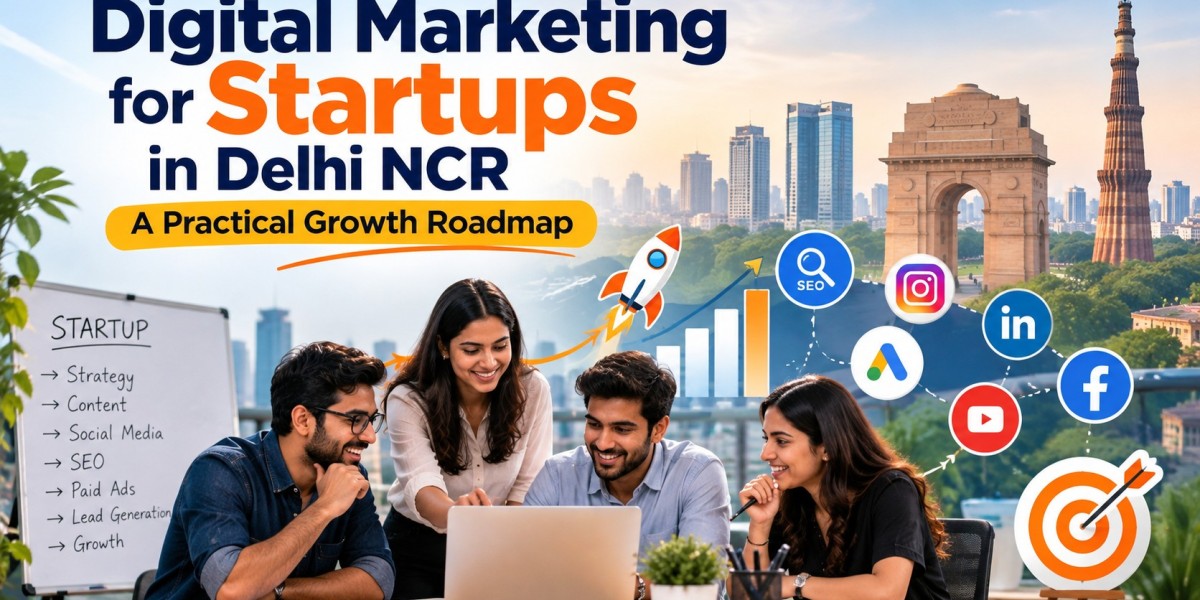
Delhi NCR has become a competitive hub for startups, entrepreneurs, and emerging businesses. From technology-driven ventures and SaaS companies to D2C brands and local service providers, startups across the region are competing to attract customers, build brand awareness, and generate consistent revenue. In this environment, having an innovative product or service is not enough. Businesses also need a clear strategy to reach the right audience and convert interest into measurable growth.
This is where digital marketing for startups in Delhi NCR becomes essential. A well-planned marketing strategy helps startups establish an online presence, improve search visibility, generate qualified leads, and build long-term customer relationships without wasting limited resources.
However, startup growth rarely comes from implementing every marketing tactic at once. The key is to prioritize the right channels, understand customer behavior, track performance, and scale campaigns according to business goals. Whether you are launching a new venture or expanding an established startup, this practical roadmap can help you build a stronger digital presence and achieve sustainable growth.
Why Startups in Delhi NCR Need a Strategic Digital Marketing Plan
Startups often face three major challenges: limited budgets, strong competition, and the pressure to generate results quickly. Without a clear marketing plan, businesses may spend money on advertising, social media, and content creation without understanding which activities contribute to actual sales.
A structured digital marketing strategy helps address these challenges by connecting marketing activities with measurable business objectives.
Here are some important benefits:
- Improved online visibility: Help potential customers discover your business through search engines, social platforms, and relevant online channels.
- Cost-effective customer acquisition: Focus spending on channels and audiences that offer the strongest potential for conversions.
- Better lead generation: Attract prospects who are actively searching for your products or services.
- Stronger brand credibility: Build trust through helpful content, customer reviews, case studies, and a professional website.
- Measurable performance: Use analytics to understand traffic, enquiries, conversion rates, and customer acquisition costs.
For startups operating in Delhi, Noida, Gurugram, Faridabad, and Ghaziabad, a localized strategy can also help connect businesses with customers in their immediate service areas.
Step 1: Define Your Startup's Growth Goals
Before investing in marketing, identify what your startup needs to achieve. A company looking for its first 100 customers requires a different strategy from a business trying to increase monthly revenue or enter a new market.
Start by defining one primary objective and a few supporting metrics.
For example, a B2B startup might prioritize qualified sales enquiries, while a D2C brand could focus on online purchases and repeat customers. A local service provider may want more phone calls, appointment bookings, and website enquiries.
Consider these important performance indicators:
- Website traffic from relevant audiences
- Qualified leads and enquiry volume
- Conversion rate from visitors to customers
- Customer acquisition cost (CAC)
- Return on advertising spend (ROAS)
- Organic keyword rankings and search visibility
- Customer retention and repeat purchases
Set realistic targets based on your current performance, budget, and available resources. Reviewing these metrics monthly helps you identify opportunities and make informed marketing decisions.
Step 2: Build a Strong Website Before Scaling Traffic
Your website is often the first point of contact between your startup and a potential customer. If visitors cannot understand your offering, find important information, or take the next step, even a successful marketing campaign may fail to generate meaningful results.
A growth-focused startup website should include:
- Clear messaging that explains your product or service.
- Fast loading speeds and a mobile-friendly design.
- Dedicated service or product pages.
- Prominent calls to action, such as Book a Consultation, Request a Quote, or Buy Now.
- Customer testimonials, reviews, and relevant case studies.
- Proper analytics and conversion tracking.
- Search-friendly page titles, meta descriptions, headings, and internal links.
Startups do not always need a large website with dozens of pages. A focused website with a clear value proposition and well-designed landing pages can be a more practical starting point.
Before spending heavily on paid campaigns, make sure your website can turn incoming visitors into enquiries, sign-ups, or purchases.
Step 3: Invest in SEO for Sustainable Organic Growth
Search engine optimization (SEO) helps your startup appear when potential customers search for relevant products, services, or solutions. Unlike paid advertising, organic search visibility can continue generating traffic without a direct cost for every click.
For startups, the most effective approach is often to begin with specific, relevant keywords rather than immediately competing for broad, highly competitive search terms.
For example, a startup providing business software could target searches related to its particular features, target industries, or customer problems. A local service business could focus on location-based searches that reflect genuine buying intent.
An effective startup SEO strategy includes:
- Technical SEO: Improve site speed, mobile usability, crawlability, indexing, and website structure.
- On-page SEO: Optimize page titles, headings, descriptions, URLs, content, and internal links around relevant search intent.
- Content marketing: Publish useful blogs, guides, comparisons, and FAQs that answer customer questions.
- Local SEO: Optimize your Google Business Profile when eligible, maintain accurate business information, and encourage genuine customer reviews.
- Authority building: Earn relevant backlinks through valuable content, industry partnerships, and legitimate digital PR.
SEO requires consistency. Some improvements may appear within a few months, but competitive keywords can take considerably longer. Startups should assess progress through qualified organic traffic, enquiries, conversions, and ranking trends rather than relying on rankings alone.
Step 4: Choose the Right Digital Marketing Agency in Delhi
Managing every marketing activity internally can be difficult for a startup with a small team. Working with a digital marketing agency in Delhi can provide access to specialized skills, campaign management, and strategic guidance without requiring a full in-house department.
However, the right agency should be selected according to your business objectives, industry, and growth stage—not simply the lowest price or the largest list of services.
Before choosing a partner, evaluate the following factors:
- Relevant experience: Check whether the agency understands your industry, target customers, and business model.
- Transparent reporting: Look for clear reports covering leads, conversions, spending, and campaign performance.
- Customized strategy: Avoid one-size-fits-all plans that allocate equal resources to every channel.
- Communication: Choose a team that provides timely updates and responds to changing business needs.
- Account ownership: Ensure your startup retains control of its website, advertising accounts, analytics, and marketing data.
- Realistic expectations: Be cautious of guaranteed rankings, instant organic growth, or promises of a fixed number of sales without adequate evidence.
A reliable partner should explain why a particular channel is recommended, how success will be measured, and what adjustments may be necessary as results develop.
Why Consider DigiDir Digital Marketing Agency?
For startups looking for professional marketing support, DigiDir Digital Marketing Agency is an option to consider for building a structured digital growth strategy. Its service areas include SEO, PPC and Google Ads, social media marketing, content marketing, and website development.
A startup-focused approach can help businesses prioritize the activities most relevant to their current goals instead of spreading limited budgets across too many channels.
When evaluating DigiDir or any other provider, startups should review relevant case studies, reporting practices, service scope, and proposed performance indicators to determine whether the partnership fits their requirements.
For businesses searching for a digital marketing company in Delhi, the most suitable choice is one that combines strategic planning, execution, and performance measurement with a clear understanding of startup constraints.
Step 5: Use PPC and Google Ads for Faster Lead Generation
SEO is a long-term investment, but startups sometimes need enquiries and sales while their organic visibility is still developing. Pay-per-click advertising can help bridge that gap by placing relevant offers in front of people actively searching for solutions.
Google Ads can be particularly useful for startups with a clearly defined target audience and an offer that meets an existing market need.
To improve campaign performance:
- Target high-intent keywords relevant to your products or services.
- Use location targeting when serving specific areas of Delhi NCR.
- Create dedicated landing pages for individual offers.
- Add negative keywords to reduce irrelevant clicks.
- Track calls, form submissions, purchases, and other meaningful conversions.
- Review search terms, bidding strategies, and campaign performance regularly.
For example, a startup providing accounting software could create separate campaigns for small businesses, freelancers, and specific accounting needs rather than directing all visitors to a generic homepage.
Remember that advertising results depend on competition, landing-page quality, pricing, audience targeting, and sales follow-up. Paid traffic does not automatically translate into profitable growth.
A sensible approach is to begin with a controlled budget, evaluate conversion data, and increase spending only when the campaign demonstrates acceptable economics.
Step 6: Select Social Media Platforms Based on Your Audience
Social media marketing helps startups communicate their value, develop brand recognition, and engage with potential customers. However, being active on every platform is rarely necessary.
Choose channels according to your business model and the people you want to reach.
- LinkedIn for B2B startups: Useful for professional services, SaaS businesses, recruitment platforms, and companies targeting decision-makers. Founder insights, industry commentary, customer success stories, and educational posts can support credibility and lead generation.
- Instagram for consumer brands: Suitable for visually driven products, lifestyle businesses, fashion, beauty, food, and many D2C ventures. Reels, product demonstrations, creator collaborations, and customer-generated content can support discovery.
- Facebook for local and community-focused businesses: Can help eligible businesses reach local audiences, maintain community engagement, and promote relevant offers.
- YouTube for educational content: Product tutorials, demonstrations, expert interviews, and detailed explainers can help customers understand complex products and services.
Focus on publishing useful content consistently rather than chasing posting frequency. Track meaningful indicators such as qualified website visits, direct enquiries, saves, shares, and conversions.
Step 7: Create Content That Solves Customer Problems
Content marketing gives startups a way to demonstrate expertise before asking potential customers to make a purchase. Useful content can answer questions, explain product benefits, address objections, and support customers at different stages of the buying journey.
A practical content plan can include:
- Educational blog posts addressing common customer problems.
- Comparison articles explaining differences between available solutions.
- Frequently asked questions about pricing, implementation, and product features.
- Case studies showing how customers used a product or service.
- Short videos demonstrating how a solution works.
- Downloadable resources, checklists, or guides for qualified prospects.
For instance, a startup selling project management software could publish articles about improving team productivity, choosing project management tools, and organizing remote workflows.
Each piece of content should have a purpose. Some content attracts new audiences, some builds trust, and some helps convert prospects who are already considering a purchase.
Avoid producing large volumes of generic, repetitive articles simply to target more keywords. Original insights, accurate information, and clear relevance to your audience provide a stronger foundation for long-term visibility.
Step 8: Make Local SEO Work Across Delhi NCR
For startups serving a defined geographical area, local SEO can be an important source of qualified leads. Customers frequently search for nearby service providers, local companies, and businesses operating in specific commercial areas.
A practical local SEO plan includes:
- Creating or optimizing a Google Business Profile when the business is eligible.
- Maintaining consistent business details across legitimate directories.
- Developing location-relevant service pages where they provide genuine value.
- Collecting authentic customer reviews and responding professionally.
- Adding accurate contact information and clear service-area details.
- Creating locally relevant content that answers customer questions.
For example, a startup operating in Noida but serving clients throughout Delhi NCR can explain its service coverage clearly and build relevant pages around its actual offerings and locations.
Avoid creating numerous nearly identical city pages or listing virtual offices as genuine business locations. Local SEO should reflect the startup's real operations and provide useful information to prospective customers.
Step 9: Explore GEO and AI Search Visibility
Customer discovery is evolving as AI-powered search experiences and conversational tools become more common. Some users now ask AI systems to explain products, compare providers, or recommend possible solutions.
Generative Engine Optimization (GEO) refers to efforts aimed at improving the likelihood that a business's useful, credible information is surfaced in AI-generated answers. It complements rather than replaces traditional SEO.
Startups can strengthen their digital presence by:
- Publishing accurate, original, and genuinely helpful content.
- Clearly explaining products, services, expertise, and business details.
- Using descriptive headings and structured content where appropriate.
- Maintaining consistent information across credible websites and business profiles.
- Earning relevant mentions and citations through legitimate PR and industry relationships.
- Keeping important pages accessible to search engines and monitoring available referral and search data.
No agency can guarantee that an AI platform will recommend a particular business. The objective is to build a trustworthy digital footprint that supports discovery across traditional search and emerging AI-powered experiences.
Step 10: Measure Results and Optimize Your Strategy
A digital marketing strategy should evolve as your startup gathers real performance data. Regular analysis helps identify which channels attract valuable customers and which activities need improvement.
Use the following metrics as a starting point:
| Marketing channel | Key performance indicators |
|---|---|
| SEO | Organic traffic, relevant rankings, qualified leads, conversions |
| Google Ads | Cost per lead, conversion rate, customer acquisition cost, ROAS |
| Social media | Relevant engagement, referral traffic, enquiries, assisted conversions |
| Content marketing | Organic visits, engagement, downloads, lead contribution |
| Website | Conversion rate, form completions, calls, sign-ups |
| Local SEO | Relevant local visibility, calls, direction requests, qualified enquiries |
Review performance at least monthly, while monitoring paid campaigns more frequently when necessary.
Do not judge a channel solely by traffic volume. A smaller number of highly qualified leads may be more valuable than thousands of visits from people who are unlikely to become customers.
The ultimate goal is to understand how marketing investment contributes to revenue, profitability, and sustainable business growth.
A Practical 90-Day Digital Marketing Roadmap for Startups
A 90-day roadmap gives startups a manageable framework for moving from planning to execution and optimization.
Days 1–30: Build the Foundation
Start by understanding your target audience, defining business goals, researching relevant keywords, and reviewing competitors. Audit your website, set up analytics and conversion tracking, and improve the pages most important to customer acquisition.
Choose one or two priority marketing channels based on your business model and available budget. Establish a baseline for traffic, enquiries, conversions, and advertising costs.
Days 31–60: Launch and Test
Publish search-focused content, implement priority SEO improvements, and launch controlled paid campaigns if immediate lead generation is required.
Begin a consistent social media schedule on the platforms most relevant to your customers. Test different landing-page messages, calls to action, and audience segments.
Monitor performance to understand which messages and channels are attracting qualified prospects.
Days 61–90: Optimize and Scale
Review the first two months of data and identify the activities producing the strongest results. Improve underperforming landing pages, refine advertising targeting, update content, and strengthen internal links.
Increase investment in channels that demonstrate sustainable performance, while reducing spending on activities that do not support your business objectives.
At the end of 90 days, create the next-quarter plan based on actual results rather than assumptions.
This roadmap is a starting framework, not a guarantee of a specific number of leads or sales. Results depend on competition, budget, industry, execution, and the startup's overall offer.
How Much Should a Startup Spend on Digital Marketing in Delhi NCR?
There is no universal marketing budget suitable for every startup. Costs vary according to the services required, competition, website condition, target audience, and the level of expertise involved.
A practical budgeting framework should separate three expenses:
- Agency or execution fees: The amount paid for SEO, paid campaign management, social media, content, or other professional services.
- Advertising spend: The separate budget paid to advertising platforms such as Google or Meta.
- Website and creative investment: Costs for landing pages, website development, design, video production, and other supporting assets.
Instead of choosing a package based on the number of deliverables alone, evaluate the business outcome expected from the investment. A startup focused on organic visibility may prioritize technical SEO and content, while a business with an urgent sales target may allocate more resources to conversion-focused paid campaigns.
A professional digital marketing services in Delhi provider should clearly explain the scope of work, expected milestones, reporting process, and costs before the engagement begins.
Start with an affordable, measurable plan and expand it as your business develops a clearer understanding of customer acquisition costs and revenue potential.
Common Digital Marketing Mistakes Startups Should Avoid
Even a well-funded startup can lose momentum when marketing activities lack focus. Avoid these common mistakes:
- Targeting everyone: Broad messaging often fails to connect with a specific customer segment.
- Expecting instant SEO results: Organic growth requires consistent work and realistic timelines.
- Running ads without tracking: Unmeasured campaigns make it difficult to understand profitability.
- Ignoring the website experience: Slow pages and unclear offers can reduce conversions.
- Publishing content without a strategy: Every piece should serve a defined audience and business objective.
- Choosing an agency solely on price: The lowest quote may not provide the expertise or reporting your startup needs.
- Ignoring customer retention: Sustainable growth depends on repeat purchases, referrals, and customer satisfaction as well as new leads.
- Following every trend: New platforms and tactics should be tested against your actual business goals before receiving significant investment.
A disciplined approach helps startups preserve resources, learn faster, and build marketing systems that can scale with the business.
Why DigiDir Digital Marketing Agency Can Be a Growth Partner
Choosing the right marketing partner can make it easier for startups to coordinate campaigns, measure progress, and adapt to changing market conditions. DigiDir Digital Marketing Agency offers services across SEO, Google Ads and PPC, social media marketing, content marketing, and website development.
For startups in Delhi NCR, a coordinated strategy can connect website performance, search visibility, paid acquisition, and content into a more consistent customer journey.
DigiDir can be considered by businesses looking for a digital marketing agency in Delhi to help plan and execute marketing activities around specific growth objectives. Its services may be relevant to early-stage ventures establishing an online presence as well as growing companies looking to improve lead generation and digital visibility.
Before selecting any agency, discuss your target audience, current performance, budget, reporting expectations, and desired outcomes. Review relevant experience and agree on measurable objectives so that both sides understand how progress will be evaluated.
The best digital marketing partnership is not simply about running more campaigns. It is about making informed decisions, improving performance over time, and connecting marketing investment with meaningful business results.
Conclusion
Digital marketing for startups in Delhi NCR works best when every activity supports a clear growth objective. Start with a strong website, understand your target audience, and select the channels most likely to produce relevant results. Build organic visibility through SEO, use paid campaigns where immediate demand capture is important, and support both with useful content and consistent social media communication.
Measure performance regularly, refine your strategy using real data, and scale investment only when you understand what is working. With a structured 90-day roadmap and the right execution partner, startups can establish a credible online presence and create a stronger foundation for long-term growth.
Whether you manage marketing internally or work with DigiDir Digital Marketing Agency, focus on sustainable customer acquisition, transparent reporting, and continuous improvement rather than short-term visibility alone.
Frequently Asked Questions
1. Why is digital marketing important for startups in Delhi NCR?
Digital marketing helps startups reach relevant audiences, improve online visibility, generate leads, and build brand credibility. It also allows businesses to measure performance and adjust spending according to their growth objectives.
2. How can I choose the right digital marketing agency in Delhi?
Look for relevant industry experience, transparent reporting, customized strategies, clear communication, and realistic expectations. Confirm that your startup retains ownership of its website, advertising accounts, and analytics data.
3. What services should a startup prioritize first?
Most startups should begin with a conversion-ready website, foundational SEO, analytics, and a clear customer acquisition strategy. Depending on their needs, they can add Google Ads, social media marketing, and content marketing as resources allow.
4. How long does digital marketing take to show results?
Paid campaigns may begin generating traffic soon after launch, although profitable conversions are not guaranteed. SEO and organic content generally require several months or longer to demonstrate meaningful results, depending on competition and execution.
5. Is SEO better than Google Ads for startups?
Neither channel is universally better. SEO supports long-term organic visibility, while Google Ads can capture existing demand more quickly. The appropriate mix depends on your budget, business model, competition, and revenue targets.
6. How much does digital marketing cost for startups in Delhi NCR?
Costs depend on the channels, scope of services, advertising budget, and competition. Startups should request a clear breakdown of service fees, advertising spend, website costs, and expected deliverables before committing.
7. Can a digital marketing company in Delhi help generate qualified leads?
Yes. A suitable agency can coordinate search optimization, paid advertising, landing pages, content, and conversion tracking to attract relevant prospects. Actual lead quality and volume depend on the offer, targeting, market demand, and sales process.
8. What should I look for in digital marketing services in Delhi?
Look for services aligned with your business goals, a clearly defined scope, relevant expertise, measurable KPIs, transparent reporting, and a process for optimizing campaigns as performance data becomes available.
9. What is the 90-day digital marketing roadmap?
It is a practical framework that divides the first three months into foundation building, campaign launch and testing, and optimization. The roadmap helps startups establish priorities, gather performance data, and make better-informed decisions about future investment.