


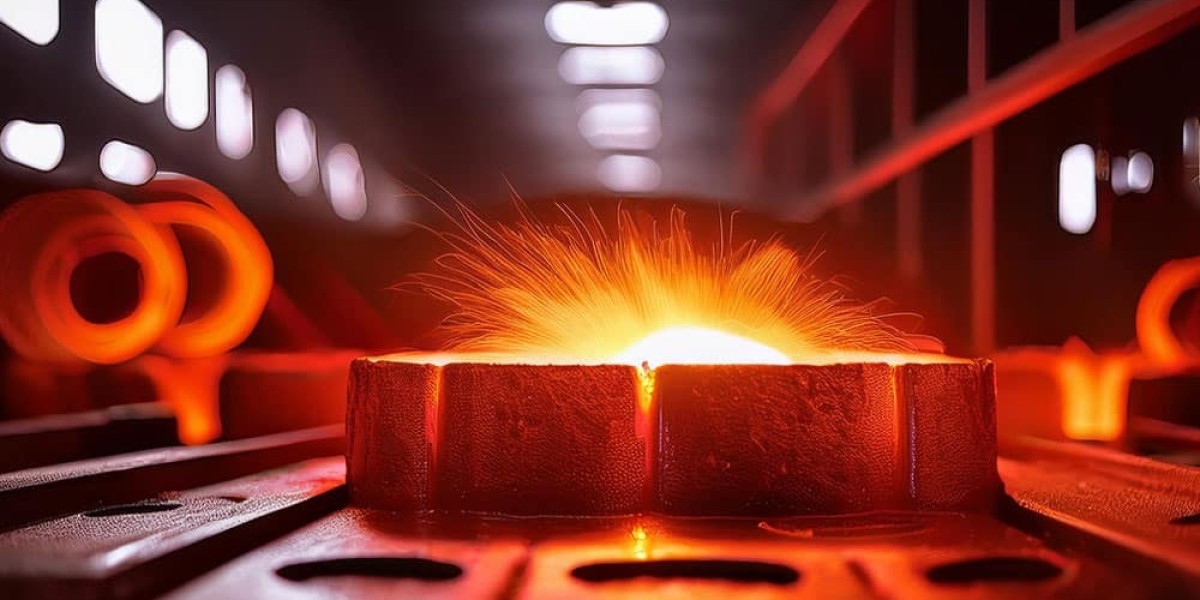
According to Wantstats, the heat treating market is a fundamental and enabling industry that is critical to modern manufacturing. Heat treating involves a series of controlled heating and cooling processes used to alter the physical and mechanical properties of metals. From hardening a gear for a wind turbine to softening a wire for a paperclip, these processes are essential for making materials stronger, more durable, and more machinable. The market is driven by the quality and performance demands of every metal-using industry.
What Is Heat Treating?
Heat treating improves the properties of metals.
Key Processes
Hardening
Tempering
Annealing
Normalizing
Case Hardening
Benefits
Increased strength and hardness
Improved wear resistance
Enhanced machinability
Stress relief
Applications
Automotive Components
Aerospace Parts
Tooling and Dies
Medical Implants
Energy Equipment
Market Drivers
Several factors drive demand for heat treating services.
Industrial Quality
The universal need for durable, reliable metal components.
Automotive Industry
Modern engines and transmissions rely on heat-treated parts.
Aerospace
Critical components must withstand extreme stress.
Energy Sector
Wind turbines, gas turbines, and nuclear plants require high-performance materials.
Additive Manufacturing
3D-printed metal parts often require heat treating.
Technology Trends
Heat treating technology is becoming more precise and efficient.
Vacuum Furnaces
Offer superior control and cleanliness for critical parts.
Atmosphere Control
Precise control of the furnace atmosphere to prevent contamination.
Computer Simulation
Modeling of processes to predict results and optimize cycles.
Energy Efficiency
New furnace designs that reduce energy consumption and emissions.
Regional Dynamics
The market is geographically distributed, following manufacturing activity.
Asia-Pacific
The world's largest market, driven by its manufacturing hub.
North America
A strong aerospace and medical device sector drives demand for high-quality treating.
Europe
Strong automotive and industrial base with a focus on advanced technology.
Competitive Landscape
The market is highly fragmented, with many small, local, commercial heat treaters, alongside large captive operations within major manufacturers.
Challenges
The market faces several challenges.
High energy costs
Environmental regulations
Skilled labor shortages
Capital intensity of modern furnaces
Opportunities
Opportunities exist across multiple fronts.
Additive Manufacturing
New opportunities for heat treating 3D-printed parts.
Electric Vehicles
New components and materials requiring heat treatment.
Advanced Materials
Treating new alloys and superalloys for demanding applications.
Digitalization
Integrating heat treat operations into smart factory systems.
Future Outlook
The heat treating market is expected to grow in line with global manufacturing, with a growing focus on precision, efficiency, and sustainability.
For service providers, success will require investment in advanced technology and automation, a commitment to quality and metallurgical expertise, and a focus on reducing the environmental footprint. Heat treating is the hidden science that gives strength and durability to the world around us.