


The Smart Agriculture Solution Market is steadily transforming the agricultural landscape by introducing advanced technologies that help farmers improve efficiency, increase productivity, and manage resources more effectively. Modern agriculture is evolving beyond conventional practices as producers adopt intelligent systems that provide better visibility into daily farming operations. As per Market Research Future, the growing focus on agricultural modernization continues to encourage the adoption of innovative digital farming solutions across various farming environments.
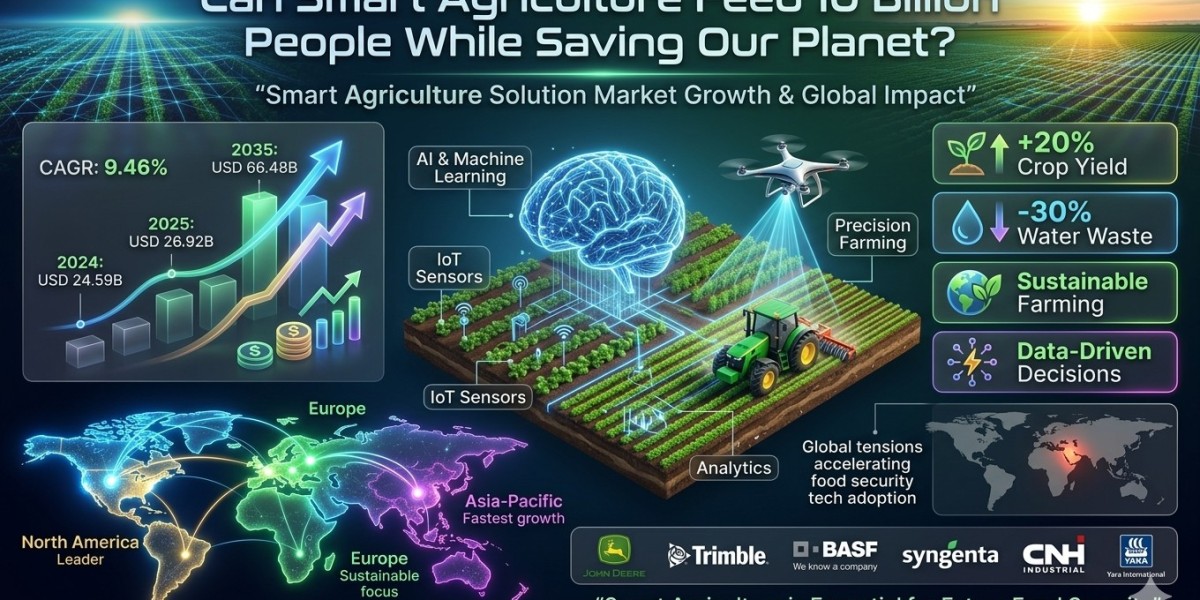
One of the most influential developments supporting this evolution is the implementation of smart farming technologies. These technologies integrate sensors, automated equipment, cloud computing, artificial intelligence, and connected devices to create a comprehensive farming ecosystem. By collecting and analyzing real-time information, farmers gain valuable insights that improve operational planning and overall farm performance.
Data-driven agriculture has become an essential component of modern farm management. Sensors installed throughout agricultural fields continuously monitor soil conditions, environmental factors, and crop health. This constant stream of information enables farmers to identify potential challenges before they become serious problems, allowing timely interventions that protect crop quality and yield.
Automation has significantly improved agricultural efficiency. Smart machinery equipped with advanced navigation systems performs planting, spraying, fertilizing, and harvesting with greater precision than traditional equipment. Automated operations reduce manual labor requirements while improving consistency across large farming areas.
Remote monitoring capabilities have also become increasingly valuable. Farmers can access real-time farm information through mobile applications and cloud-based platforms regardless of their location. This flexibility enables quicker decision-making and better coordination of farming activities throughout the growing season.
Artificial intelligence contributes to smarter agricultural planning by evaluating historical records alongside current environmental conditions. Intelligent algorithms help predict irrigation requirements, identify crop stress, recommend nutrient management strategies, and improve harvesting schedules. These predictive capabilities support more informed operational decisions while minimizing unnecessary resource consumption.
Sustainability remains a primary objective within modern agriculture. Smart farming technologies promote responsible resource management by optimizing water usage, improving fertilizer efficiency, and reducing unnecessary pesticide applications. These environmentally friendly practices contribute to healthier agricultural ecosystems while supporting long-term productivity.
Digital record management has become another advantage of smart agriculture. Farmers can maintain organized documentation related to crop performance, field activities, equipment maintenance, and operational planning within centralized software platforms. Easy access to historical information supports better planning for future growing seasons.
The continued advancement of intelligent agricultural technologies is helping farms become more efficient, productive, and resilient. As innovation expands across the agricultural industry, smart agriculture solutions will remain an essential foundation for improving operational performance while supporting sustainable food production for future generations.
FAQs
Q1. What are smart farming technologies?
Smart farming technologies include connected devices, automation systems, artificial intelligence, cloud platforms, and monitoring tools that improve agricultural operations through data-driven decision-making.
Q2. How do smart agriculture solutions support sustainable farming?
They help optimize water use, improve fertilizer management, reduce unnecessary chemical applications, enhance resource efficiency, and promote environmentally responsible agricultural practices.